

Richland Landscape Services
Sign up now for autumn services and enjoy a vibrant, worry-free yard all season long.
Get a Free QuoteLandscape Services Tailored for Richland, Georgia
Expert Lawn Care for Richland’s Unique Environment
Richland, Georgia’s residential landscapes face a blend of environmental challenges shaped by the region’s humid subtropical climate and rolling terrain. Homeowners in neighborhoods near the scenic Richland City Park or along the gentle slopes by the Chattahoochee Valley must contend with heavy summer rains that can lead to soil erosion, especially on properties with uneven ground. Mature oaks and pines provide welcome shade but also create areas where grass struggles to thrive, requiring specialized care for shaded lawns.
Seasonal weather patterns bring their own set of concerns. Winter road treatments can introduce salt exposure along driveways and curbs, impacting turf health, while hot, dry summers often stress lawns and ornamental plantings. Our services are designed with these local factors in mind, ensuring your yard remains healthy and vibrant year-round. For more information about Richland’s community and local resources, visit the official city website.
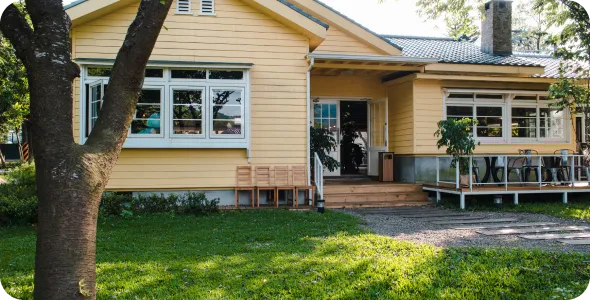
Our Richland Landscaping & Yard Care Services
Richland Gardening Services
Richland Yard Clean Up
Why Choose Richland Landscape Services

Richland Homeowners Trust Us
-
Expert Lawn Maintenance
-
Competitive Pricing
-
Professional Team
-
Satisfaction Guarantee
-
Personalized Service
-
Reliable Scheduling
Contact Your Local Richland Public Works or Solid Waste Department for Green Waste Info
Richland, located in Stewart County within Georgia's South Georgia / Coastal Plain region, manages yard waste through its Public Works Department. Residents should bundle branches under four feet in length and six inches in diameter, placing them curbside alongside bagged leaves and grass clippings for scheduled pickup. Plastic bags are discouraged; biodegradable bags or open containers are preferred. Stewart County's citizen convenience center accepts larger brush loads with proof of residency. Commercial landscapers must arrange separate disposal and may not use residential drop-off facilities. Blowing or dumping clippings, leaves, sediment, or fertilizer granules into streets, storm drains, ditches, or streams is strictly prohibited under the Clean Water Act and local stormwater protection standards. Contact the city directly for current collection schedules and storm debris procedures.
Richland Public Works Department
113 Broad Street, Richland, GA 31825
Phone: (229) 887-2561
Official Website: Richland Public Works Department
Lawn Care Regulations & Permits in Richland, GA
All commercial pesticide applicators working in Richland must hold valid Georgia Department of Agriculture licenses under the Georgia Pesticide Use and Application Act of 1976 and the Georgia Pesticide Control Act of 1976. Verify any applicator through the Georgia Department of Agriculture - Search for Pesticide Applicators. Fertilizer products sold and applied in Georgia are regulated under the Georgia Fertilizer Act of 1997, though local stormwater ordinances may further restrict application timing near waterways. Outdoor watering in Richland follows statewide Georgia Water Conservation rules, including odd/even watering schedules and restrictions to before 10 a.m. or after 4 p.m. Commercial operators must obtain an occupation tax certificate from the City of Richland, carry liability insurance, and comply with local noise ordinances limiting powered equipment use to daytime hours.
Georgia Department of Agriculture
19 Martin Luther King Jr. Drive SW, Atlanta, GA 30334
Phone: (404) 656-3600
Official Website: Georgia Department of Agriculture
What Neighborhoods Do We Serve in Richland, GA?
Richland's neighborhoods reflect the small-town Coastal Plain character of Stewart County, with sandy to sandy-loam soils, flat to gently rolling terrain, and long, hot growing seasons. Each area presents distinct lawn care considerations:
- Downtown Richland / Broad Street Corridor — Older properties with mature hardwoods and pecans creating significant shade. Sandy loam soils drain quickly but lose nutrients. Centipedegrass and bermudagrass dominate, with shade-stressed areas needing careful management near historic structures.
- North Richland / GA Highway 520 Area — Larger residential lots with open sun exposure ideal for bermudagrass. Sandy soils require consistent fertility programs to offset nutrient leaching. Proximity to drainage channels demands runoff-conscious fertilizer timing.
- South Richland / Railroad Corridor — Mixed-age properties near the rail line with compacted fill soils in some areas. Centipedegrass performs well in lower-input settings. Drainage can pool in low spots after heavy summer rains.
- East Richland / School District Area — Residential lots near Richland High School and community athletic fields. Bermudagrass lawns benefit from full sun, but mole cricket pressure is elevated in the sandy substrate.
- West Richland / Lumpkin Road Vicinity — Rural-edge properties transitioning to agricultural land. Bahiagrass and centipedegrass serve lower-maintenance lots. Sandy Coastal Plain soils here are especially prone to drought stress between rain events.
- Stewart County Residential Fringe — Properties just outside city limits with wooded pine stands and sandy soils. Pine straw accumulation affects soil pH, and nematode pressure can thin turf in unmanaged areas.
Soil testing through the USDA Web Soil Survey and UGA Extension confirms that Richland's dominant Orangeburg, Norfolk, and Tifton sandy loam series require proactive fertility and organic matter management.
Partnering With Richland's Stormwater, Environmental, or Sustainability Office
Richland's Public Works oversees stormwater and environmental compliance in coordination with Stewart County and state programs. Lawn care operators must align with Georgia EPD - Stormwater and Georgia EPD - Municipal Stormwater standards, particularly regarding nutrient and sediment runoff into Hodchodkee Creek and other local waterways feeding the Chattahoochee River watershed. Sustainable practices include:
- Proper mulching around beds and trees to reduce erosion
- Grasscycling to return nitrogen to sandy soils naturally
- Compost topdressing to improve moisture retention in fast-draining soils
- Rain garden installation in low spots to filter runoff
- Native plant integration along drainage corridors
- Avoiding fertilizer application within 25 feet of streams or ditches
Georgia Environmental Protection Division
2 Martin Luther King Jr. Drive SE, Suite 1456 East, Atlanta, GA 30334
Phone: (404) 656-4713
Official Website: Georgia Environmental Protection Division
Georgia Soil and Water Conservation Commission
4310 Lexington Road, Athens, GA 30605
Phone: (706) 552-4470
Official Website: Georgia Soil and Water Conservation Commission - Urban Erosion & Sediment Control
Top Richland Lawn Problems (and How We Solve Them)
Richland's South Georgia / Coastal Plain setting produces specific turf challenges driven by sandy soils, intense summer heat, and high pest pressure:
- Nutrient Leaching in Sandy Soils — Nitrogen and potassium wash through Richland's sandy loam rapidly. Solution: split fertilizer applications into smaller, more frequent doses during the growing season and use slow-release formulations per UGA Lawn Care & Landscaping guidelines.
- Mole Cricket Damage — Tawny mole crickets tunnel through sandy substrates, destroying root systems in bermudagrass and bahiagrass. Solution: apply targeted bait treatments in late spring when nymphs are small, following UGA IPM protocols.
- Nematode Pressure — Sandy soils harbor root-knot and sting nematodes that thin centipedegrass and bermudagrass. Solution: submit soil samples for nematode assay through UGA Extension and select resistant cultivars.
- Drought Stress Between Rain Events — Despite adequate annual rainfall, Richland's sandy soils lose moisture quickly. Solution: irrigate deeply and infrequently during early morning hours, and topdress with compost to build organic matter.
- Large Patch Disease — Warm, humid conditions trigger large patch in centipedegrass and zoysiagrass during fall and spring transitions. Solution: avoid late-season nitrogen, improve air circulation, and apply preventive fungicides only when warranted.
- Armyworm Infestations — Fall armyworms can devastate bermudagrass lawns in late summer. Solution: scout weekly during August and September and treat promptly using UGA Turfgrass recommendations.
- Weed Pressure After Summer Rain — Crabgrass, goosegrass, and tropical signalgrass exploit thin turf after heavy rains. Solution: maintain proper mowing height, apply pre-emergent herbicides in early spring, and address bare spots promptly.
What Makes Lawns in Richland Different From the Rest of Georgia?
Richland sits in USDA Hardiness Zone 8b within the upper Coastal Plain, distinguishing it from Piedmont red-clay suburbs, North Georgia mountain-fringe communities, and coastal marshland settings:
- Soil: Sandy to sandy-loam soils drain rapidly, unlike the heavy red clay of Metro Atlanta or the waterlogged marsh soils of coastal Savannah — requiring fundamentally different fertility and irrigation strategies
- Growing Season: Approximately 240–260 frost-free days, longer than North Georgia by six to eight weeks, supporting extended warm-season turf performance
- Dominant Turf: Centipedegrass, bermudagrass, and bahiagrass thrive here; tall fescue is not viable as it is in Piedmont shade gardens, and St. Augustinegrass is less common than along the coast
- Pest Profile: Mole crickets and nematodes are far more aggressive in Richland's sandy substrate than in clay-based regions farther north
- Water Dynamics: Drought stress occurs between rain events despite 48–52 inches of annual rainfall, because sandy soils cannot retain moisture the way clay soils do
- Landscape Character: Mature pecan groves, pine stands, and open agricultural edges define Richland's lots, unlike HOA-driven subdivisions in Metro Atlanta or marshfront properties on the coast
UGA Cooperative Extension — Stewart County
P.O. Box 609, Lumpkin, GA 31815
Phone: (229) 838-4908
Official Website: UGA Lawn Care & Landscaping
Supporting Local Events in Richland With Lawn Expertise
Professional lawn care supports Richland's community life through preparation and maintenance of public green spaces:
- Athletic field conditioning for Richland High School sports seasons and youth recreation programs
- Park and grounds preparation for Stewart County community gatherings and seasonal festivals
- Downtown green space maintenance for farmers market events and civic celebrations
- School campus lawn care coordination with Stewart County School District
- Post-storm cleanup support after summer thunderstorms, including fallen limb removal, debris clearing, and turf repair in damaged areas
- Volunteer coordination with watershed cleanup efforts along Hodchodkee Creek and local drainage corridors
Richland Parks & Recreation
113 Broad Street, Richland, GA 31825
Phone: (229) 887-2561
Official Website: Richland Parks & Recreation
Eco-Friendly Landscaping Backed by Richland's Water-Saving and Green Initiatives
Richland's lawn care practices align with statewide water conservation and environmental protection goals critical to the Chattahoochee River watershed:
- Water Conservation: Smart irrigation controllers, early-morning watering schedules, deep and infrequent irrigation cycles, and drought-tolerant centipedegrass and bahiagrass selection to reduce water demand
- Reduced-Chemical Approaches: Compost topdressing to build soil organic matter, integrated pest management to minimize pesticide use, proper fertilizer timing to prevent runoff, and pollinator-friendly native plantings along property edges
- Carbon Footprint Reduction: Battery-powered mowers and trimmers, route-efficient service scheduling, grasscycling to eliminate bagged clippings, and local mulch reuse from community brush-chipping programs
- Soil Health: Annual soil testing, lime or sulfur amendments based on pH results, and organic matter incorporation to improve the moisture-holding capacity of Richland's sandy Coastal Plain soils
National Weather Service — Tallahassee Office
1017 Academic Way, Tallahassee, FL 32306
Phone: (850) 942-8833
Official Website: National Weather Service Offices
U.S. Environmental Protection Agency, Region 4
61 Forsyth Street SW, Atlanta, GA 30303
Phone: (404) 562-9900
Official Website: U.S. EPA Region 4
Proudly Serving These Streets and Areas in Richland
Our service coverage spans the full extent of Richland and surrounding Stewart County residential areas:
Downtown / Central Richland:
- Broad Street
- Railroad Street
- Church Street
- Peach Street
- Cotton Street
- Academy Avenue
North Richland:
- GA Highway 520 (US-280) corridor
- Lumpkin Road
- Pine Street
- Magnolia Drive
South & East Richland:
- GA Highway 27 corridor
- School Street and Richland High School vicinity
- Depot Street
- Elm Street
West Richland / Rural Edge:
- Omaha Highway
- County Road 45 corridor
- Stewart County residential properties along Hodchodkee Creek
Notable Landmarks & Green Spaces:
- Richland City Park
- Richland High School athletic fields
- Stewart County Courthouse grounds (Lumpkin)
- Hodchodkee Creek drainage corridor
- Downtown Richland historic commercial district
Properties near Hodchodkee Creek or stormwater drainage features require special attention to buffer zones, erosion prevention, and fertilizer setback distances to protect water quality downstream in the Chattahoochee River system. Residents with questions about invasive species or turf management can contact the Stewart County UGA Extension office for science-based guidance.